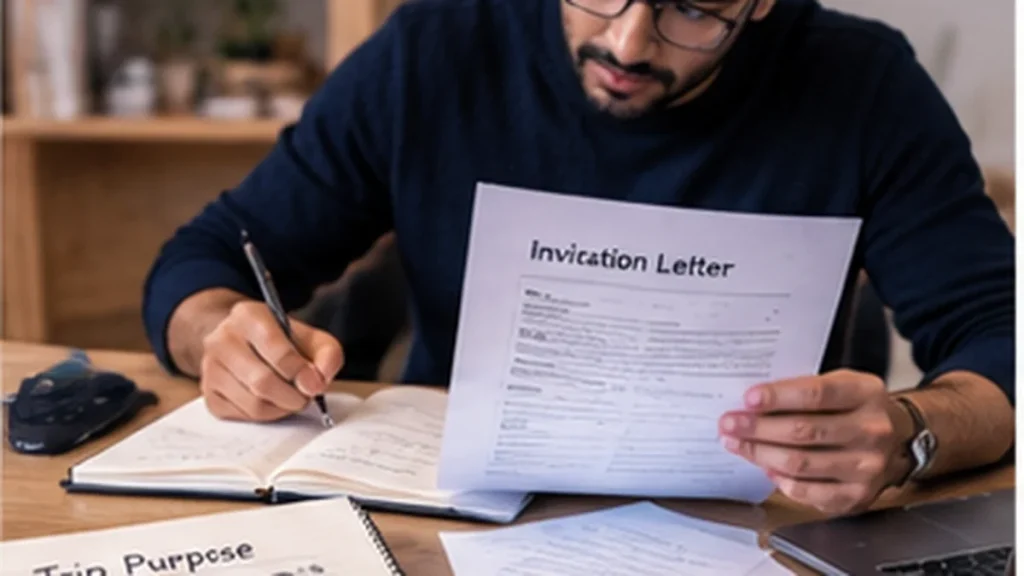
Visa invitation letter an invitation letter can explain who is inviting you, the relationship, travel purpose, planned stay, or accommodation, but it is not a substitute for meeting the actual visa requirements. Whether a letter is useful or required depends on the country and visa route.
This article provides general informational guidance, not legal advice or a promise of visa approval. Immigration rules change, and the official authority for the destination country should always be the final source for current eligibility, fees, forms, processing steps, and legal requirements. For this visa invitation letter topic, apply the principle only after checking the official route and country that apply to your own case.
Visa invitation letter: first check whether the route needs one
Some routes request a letter, some accept it as optional supporting evidence, and some do not treat it as an important factor. Use the official application instructions for the destination.
Do not assume that a formal-looking letter will improve an application if the route does not ask for it.
For the section “Visa invitation letter: first check whether the route needs one,” note which point comes directly from an official source, which evidence supports it, and what still needs confirmation. In visa invitation letter, this prevents a generic checklist from replacing the actual route rules.
Use the letter to explain facts, not make promises
A useful letter can identify the inviter, applicant, relationship, purpose, dates, accommodation, and any genuine support being provided.
Avoid exaggerated language such as guaranteeing approval, guaranteeing departure, or claiming special influence with immigration authorities.
After reviewing “Use the letter to explain facts, not make promises,” write one sentence explaining how it applies to your own case and one sentence identifying the official page you would use to verify it again before submission. This keeps visa invitation letter tied to current evidence.
Keep the letter consistent with the application
Travel dates, accommodation, relationship details, and purpose should match the form and other supporting documents.
Inconsistencies can create unnecessary questions even when the underlying trip is genuine.
Use “Keep the letter consistent with the application” as a verification checkpoint: record the rule, the document or fact that answers it, and the date you last confirmed the requirement. That record is useful if visa invitation letter preparation takes several weeks.
Separate invitation from financial sponsorship
Inviting someone and paying for their trip are different issues. If the inviter is also providing financial support, check the visa route’s specific sponsorship evidence requirements.
A simple invitation letter may not replace the financial documents or forms required for sponsorship.
Before moving past “Separate invitation from financial sponsorship,” ask whether you know the answer from an official source or are only repeating advice from another applicant. For visa invitation letter, unresolved assumptions should remain visible until they are verified.
Do not rely on the inviter to prove your whole case
For many visitor routes, authorities assess the applicant’s own circumstances, purpose, finances, and intention to follow visa conditions.
The U.S. Department of State, for example, says a visitor-visa invitation letter is not required and applicants must qualify based on their own circumstances.
For “Do not rely on the inviter to prove your whole case,” separate what is mandatory, what is optional, and what is merely helpful. This distinction makes visa invitation letter preparation clearer and reduces unnecessary documents or payments.
Use supporting evidence only when it adds clarity
Proof of relationship, accommodation, event details, or sponsor evidence may be useful when the route requests it.
Do not overload the application with private messages or unrelated documents simply because they exist.
Treat “Use supporting evidence only when it adds clarity” as a consistency check. Compare the form, supporting evidence, and any sponsor or travel information, then resolve genuine differences through the proper official process before continuing with visa invitation letter.
Avoid purchased or fake invitation letters
A letter from a stranger, fake host, or paid service can create serious credibility and fraud problems.
Only use information that is true and that the people involved can verify if contacted.
When you finish “Avoid purchased or fake invitation letters,” save the relevant government link and any confirmation number, receipt, or document connected to that step. Good record-keeping makes later visa invitation letter questions easier to answer.
Keep a signed or verifiable copy
If the route accepts or requires a letter, keep the final version with the rest of the application file.
Make sure the contact details are current and that the inviter knows what information is being submitted.
For “Keep a signed or verifiable copy,” identify the consequence of getting the point wrong. If the risk involves eligibility, money, privacy, or a legal deadline, verify it directly before relying on a third party during visa invitation letter preparation.
Write an invitation letter around verifiable facts
A strong invitation letter is usually simple: identify the inviter and applicant, explain the genuine relationship, state the visit purpose, give realistic dates, describe accommodation, and say exactly what support—if any—the inviter will provide. Contact information should be current, and the inviter should be able to confirm the contents if contacted.
Avoid dramatic promises, emotional appeals, or claims that the applicant will certainly obey every future condition. Immigration decisions are made by the authority under the relevant law and evidence. The letter should clarify the visit, not try to replace the legal test.
Check whether the invitation creates another evidence requirement
If the inviter is providing accommodation, money, or another form of support, the visa route may ask for separate evidence of that support. The letter itself may not prove the sponsor’s identity, status, finances, address, or relationship. Read the checklist carefully so the invitation and sponsorship evidence work together rather than leaving a gap.
When the applicant is paying for the trip independently, keep that clear too. Mixed explanations—one document saying the applicant is self-funded and another saying the host pays everything—can make an otherwise genuine trip harder to understand.
A realistic visa example
A traveler visiting family believes an invitation letter alone will prove eligibility. After reading the official visitor-visa guidance, they realize the application still needs to show the real travel purpose, finances, and other required evidence, so the letter is used only to explain the family visit and accommodation.
The example does not guarantee the same outcome for another applicant. It shows how visa invitation letter becomes safer when the applicant verifies the official rule, keeps evidence consistent, and avoids making irreversible decisions based on assumptions or sales pressure.
Connect this step to the rest of your visa preparation
Use prepare financial evidence separately when that becomes the next part of the application, and review prepare to explain the purpose of travel clearly when you need to verify or strengthen another part of the process.
Do not try to solve every visa question through one article. Each destination and visa route can have different definitions, evidence standards, deadlines, and legal consequences.
A seven-day preparation plan for visa invitation letter
Day 1: identify the exact visa route and official authority. Day 2: read eligibility and document requirements. Day 3: collect only the evidence the route asks for. Day 4: verify fees, forms, and submission method. Day 5: check consistency and translations. Day 6: review privacy, fraud, and payment risks. Day 7: recheck the official page for changes before submitting or making a major payment. For this visa invitation letter topic, apply the principle only after checking the official route and country that apply to your own case.
The schedule is only an organizational example. Some applications take far longer to prepare because documents, medicals, sponsorship, interviews, or translations may require additional time.
Practical checklist
- Official requirement checked
- Inviter identified clearly
- Purpose and dates accurate
- Application details consistent
- Sponsorship separated from invitation
- No false promises
- Letter verifiable
- Copy saved
Use the checklist to organize visa invitation letter, not to predict a decision. Immigration authorities make decisions under the law and rules that apply to the specific applicant and route.
Review the invitation from both sides
The inviter should read the final letter as carefully as the applicant. Names, relationship, address, dates, purpose, and any promise of accommodation or financial support should be information the inviter can confirm independently. A letter written by an agent but never reviewed by the supposed host creates unnecessary risk.
The applicant should compare the invitation with the application form and travel plan. If the host says the stay is two weeks but the form says two months, or if the person paying for the trip changes between documents, correct the inconsistency before submission rather than hoping it will be ignored.
Keep the invitation proportionate. A concise factual letter is usually easier to understand than several pages of emotional explanation, personal history, or promises that have no role in the legal criteria for the visa.
Frequently Asked Questions
Can an agent guarantee visa invitation letter will lead to approval?
No. A representative may help with preparation where legally allowed, but only the competent immigration authority can make the visa decision.
Should I rely on social media or forum advice?
Use personal experiences only as informal context. Verify every legal requirement, fee, form, document standard, and deadline on the destination government’s official website.
What if my situation is unusual?
Use the official contact channel or obtain advice from an authorized immigration professional or qualified lawyer for the jurisdiction involved.
Should I book non-refundable travel before approval?
Follow the visa authority’s instructions. Some authorities specifically advise applicants not to book travel until a decision is issued.
How do I know whether an immigration website is official?
Start from the country’s main government or foreign-affairs website, check the domain carefully, and use its own links to reach the visa service.
Official source to verify
For current official guidance related to this topic, review U.S. Department of State. If the page directs you to a local visa office, embassy, consulate, or separate immigration portal, follow that official route for your nationality and application location. For this visa invitation letter topic, apply the principle only after checking the official route and country that apply to your own case.
Common mistakes with invitation letters
Invitation letters often become too long because applicants try to answer every possible immigration question inside one document. Keep the letter focused on the facts the inviter can personally confirm, then let other evidence answer finances, employment, study, or legal eligibility.
Another mistake is using a generic template that leaves contradictions in names, dates, relationship, or accommodation. Read the final letter next to the application form and travel plan so the same trip is being described throughout the file.
Do not purchase an invitation from a stranger or business that pretends a letter can create eligibility. An invitation is evidence only when the underlying relationship or event is genuine.
If the inviter is also a close family member or friend, personal familiarity can make both sides overlook formal details. Treat the final letter like any other immigration document: check spelling of names, passport details if included, addresses, dates, and who will pay. Small factual errors are easier to fix before submission than after an officer notices that different documents describe the visit differently.
Final perspective
Visa invitation letter is easier to manage when every important claim can be traced to an official rule or genuine document. Keep your information accurate, protect sensitive records, avoid guaranteed-result claims, and recheck official guidance whenever time passes between research and submission.